
Five testimonies from Palestinians held there
Haaretz: October 08 2026
Would you like us to summarize articles for you?
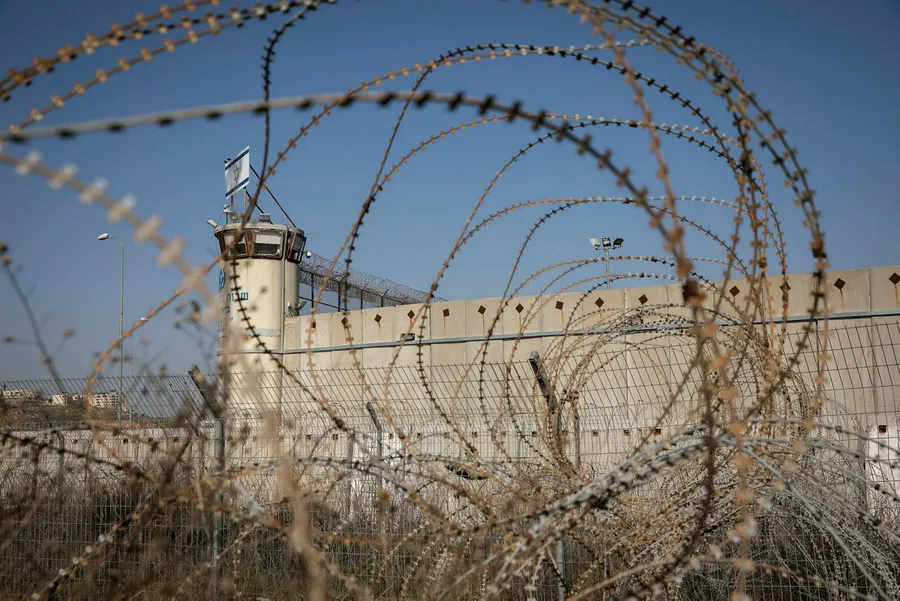
For three years now, Israel’s prisons for Palestinian inmates have operated as torture camps. Hunger, severe violence, scabies and brutal living conditions are part of everyday life for thousands of prisoners. None of this happens in the shadows. It is declared policy, now central to National Security Minister Itamar Ben-Gvir’s election campaign. The facts have been laid bare in investigations by the world’s leading news outlets, reports by human rights organizations and petitions to the High Court of Justice. The Israeli public has largely remained indifferent.
The High Court justices, too, have struggled to muster much concern. After repeated postponements and much foot-dragging, the Supreme Court ruled twice against this policy. In September 2025, the justices ordered that prisoners receive adequate nutrition. In June this year, they ordered the Israel Prison Service to resume Red Cross visits to prisons. Neither ruling appears to have changed anything in practice. Apart from minor changes to the menu, deliberate starvation continues, and Red Cross representatives still have no access to the prisons. Motions for contempt of court have been filed in both cases. A petition concerning treatment for scabies was dismissed. Violence and abuse continue unchecked in every aspect of prisoners’ lives.
In September, Israel was holding 9,329 security prisoners, but only 16 percent had been charged and convicted in court. The rest were detainees (34 percent), administrative detainees (34 percent) and “unlawful combatants” (16 percent), a status not recognized under international law that Israel uses to imprison Gazans, Syrians and Lebanese without granting them the rights of prisoners of war or criminal detainees.
According to figures supplied by the prison service last year, it has released hundreds of prisoners every month since the start of the Gaza war, independently of the hostage deals. In 2024, for example, some 5,000 prisoners were released, although no hostage-for-prisoner exchange took place that year. In most cases, prisoners are released because their detention, whether administrative (i.e., without formal charges or a trial) or otherwise, has ended without prosecution or conviction. The release of hundreds of Palestinian prisoners every month calls into question Ben-Gvir’s claim that they are terrorists or dangerous prisoners.
Five prisoners released over the past 18 months spoke to Haaretz about what goes on behind bars in the Israel Prison Service’s torture camps. Other former prisoners, particularly those held in administrative detention, declined to be interviewed for fear of reprisals.
All five lost between 15 and 50 percent of their body weight because of hunger. All were beaten severely, in the worst cases to the point of broken bones. All described how scabies ravages prisoners. All described brutal collective punishment, daily humiliation and terror. The service’s Keter tactical rapid response unit figures prominently in their accounts of the most severe violence.
The interviewees were released between April 2025 and July 2026 from Megiddo, Nafha, Ketziot, Ofer and Damon prisons. Damon holds female Palestinian inmates. All the interviewees live in the West Bank. The consensus is that conditions for detainees from Gaza are even worse.
“The guards burst into the wing and fired rubber bullets at naked prisoners in the showers” Ali Samoudi, journalist, 59
The difference between photographs of Ali Samoudi before and after his detention is hard to comprehend. “I went into prison weighing 120 kilograms [about 264 pounds], with two illnesses: diabetes and high blood pressure,” says Samoudi, who spent a year in administrative detention. “I came out 60 kilograms lighter, with 10 illnesses. I have severe headaches that have made me pass out, intense pain in my ears, problems with my eyes, pain in my stomach and colon, a racing heartbeat, a severe urinary tract infection, pain from tears in my arm and back, and inflamed tendons,” he told Haaretz just days after his release.
Samoudi is a well-known journalist from Jenin who has worked over the years with international news organizations including CNN and Reuters. He was arrested in late April 2025 and held in Ketziot and Megiddo prisons. Shortly after his arrest, the Israel Defense Forces said he was suspected of transferring money to Islamic Jihad, an allegation he vehemently denies. He was released a year later without being indicted. Administrative detention is not unusual among journalists arrested during the war. According to the Committee to Protect Journalists, 110 Palestinian journalists have been arrested since the start of the war, 73 of them from the West Bank. Of those arrested in the West Bank, 46 were held in administrative detention.

Samoudi spent his first few months in Ketziot. “There, they would cuff our hands behind our backs, shackle our feet, make us lie on the floor, step on us and beat us. The guards badly injured my arms and legs with their beatings. The raids depended on their mood. Sometimes every day, sometimes once a week. In December, a delegation sent by the Supreme Court president came to Ketziot. We explained what things were like, and they said they would make things better. A week later, they transferred us from Ketziot to Megiddo. But things didn’t improve. They actually got worse.
“In Megiddo, they shaved our heads and beards. There were 10 people in each room: Six slept in beds and another four on the floor. They gave us one pair of underpants each, so when we washed them, we had no underwear to wear. When they wanted to punish a prisoner, they would make him strip completely, whether he was young or old, and beat him all over with a thick pipe. This would happen if a prisoner took too long in the shower or spoke to someone from another room during exercise time in the yard.
“On the third day of Ramadan, guards burst into our wing with weapons and fired rubber bullets at prisoners who were naked in the showers. There was no reason for it. They wanted to intimidate us and send a message that if we prayed in groups or out loud, we’d be punished.
“For breakfast, we got a quarter of a spoonful of jam and a spoonful of labneh. Sometimes less, but never more. Each prisoner got 10 small slices of bread for the whole day. For lunch, four spoonfuls of rice, two thin slices of cucumber, two thin slices of tomato and a spoonful of beans. For dinner, a spoonful of tahini, two spoonfuls of hummus and a hard-boiled egg. On Saturdays, there’s no rice, but there’s a small piece of schnitzel. On Tuesdays, they add a small piece of turkey, and on Wednesdays, two small hot dogs. No salt, no sugar, no coffee. Less than a quarter of a cup of tea each. Sometimes they brought expired hummus, which we would throw away. Obviously, this food isn’t enough for a cat or a small child. It’s only meant to keep us able to stand up and sit down for the count. It causes illnesses like mine. I would faint and wake up sprawled on the floor.
“Passover was the worst time for food. We got four matzot a day. In the morning, a boiled potato and a hard-boiled egg, and the same thing for lunch and dinner. When it was over, they weighed us, and each of us had lost between two and eight kilograms. They weighed us every two months. Prisoners whose weight had dropped to 30 or 40 kilograms were taken to a special room and given a little extra, but nothing that really made up for the lack of food or helped with the weakness. I saw people who weighed 35, 40 and 45 kilograms, too.
“The prisons have become a cemetery for the living. A prisoner who needs to go to the clinic has to ask again and again, and even when they examine him, they don’t give him proper treatment. Prisoners hate going to the clinic, the hospital, court or meetings with a lawyer because they get beaten on the way. That’s why many refuse to go to the clinic. If you ask to go, they curse you. They told us, ‘Go to Allah or Gaza, let them cure you.’ Once, I passed out. I fell on my head, and they took me to the clinic. They gave me Acamol [acetaminophen] and dabbed on some iodine. The security officer told me, ‘Get up and go back to the wing. We can’t give you a new head.’

“One night, we heard shouting. When we asked what had happened, they told us a prisoner was sick and they were asking for a doctor. But when you ask for a doctor, nobody comes. At the morning count, they asked an officer again to bring a doctor because the prisoner had gotten worse. They kept stalling until 7:30, then let two prisoners carry him out to the yard on a mattress. It took the medic another half hour or an hour to arrive, and meanwhile he got worse. His name was Louay Turkman, and he died right in front of them. After that, they took him to the hospital.
“I’m a free, independent journalist. I’ve worked in the field for decades. I have never posed a threat to Israel’s security, and I never will. Prior to my arrest and for 40 years, I was never summoned for questioning, detained or warned. I’ve been wounded eight times by army gunfire. The last time was when they killed my colleague Shireen Abu Akleh [an Al Jazeera correspondent killed while covering an Israeli military raid in Jenin on May 11, 2022]. There’s no justification for my detention other than my work as a journalist. Maybe they were angry that I went to Geneva and testified about Shireen’s killing, or that I filed a complaint against them about it with the International Criminal Court. My detention is part of a deliberate attack on Palestinian journalism. Israel doesn’t want witnesses to what it does. It doesn’t want anyone showing the world these images.”
“We lay on our stomachs, handcuffed and blindfolded. They beat us and broke my teeth” Hiba Alawi, 38
Hiba Alawi, a mother of five from the West Bank city of Ad-Dhahiriya, south of Hebron, spent five and a half months in Damon Prison after trying twice to enter Israel for work without a permit. The plea agreement under which she was convicted contained no security-related charges and noted that she was her family’s sole breadwinner and had no criminal record. She was originally sentenced to four months in prison and fined. Because she could not pay the fine, she was imprisoned for another month and a half. In court, she told the judge she suffers from a heart condition and was not getting her medications in prison. By the time she was released this past July, she had lost 36 kilograms (about 80 pounds).
“One of the worst raids was in March,” she says of Damon, the only prison holding female Palestinian prisoners. “They threw three tear-gas grenades into the yard, let the smoke rise and shouted at us to lie on our stomachs. They came into our room, stepped on our legs, beat us, grabbed our hands and tied them with zip ties, deliberately making it hurt. They dragged us into the yard and blindfolded us with a band pulled so tight it hurt. At first, they tried to put a blindfold on me, but it wouldn’t fit over my head. Finally, another female guard came, slapped me twice as hard as she could, pulled my hair hard and put the blindfold on me. She dragged me out barefoot. If they saw someone trying to grab her flip-flops, they hit her legs. Some of the women were hit hard in the head. They beat me and broke my teeth. A guard stomped on my toes until my toenail came off.
“As we lay there, I was so terrified that I recited the shahada [the Islamic declaration of faith, also recited when death is near], and one of the guards told me, ‘Pray for your life.’ One prisoner was so frightened that she recited verses from the Quran, and they put a rifle to her head. They left us lying on the ground for about an hour. They photographed us and cursed us. Then, while we were all still lying there, they threw another stun grenade at our feet. The noise terrified me. I’m still afraid every night. Even now, if I hear a sound in the house, even a key in the door, it all comes back. I can’t get it out of my head, how they dragged us and what they did to us.

“They beat me two more times in prison. Once, they hit me in the head and sprayed me with gas. The second time, they hit me in the stomach. I bled for 15 days. I need surgery because my uterus was damaged.
“For all 170 days I was in prison, breakfast was a spoonful of labneh and a little jam on the tip of the spoon. We got six slices of bread for the whole day: sometimes hard, sometimes soaked in water, sometimes stale. For lunch, we usually got two spoonfuls of lentils, two spoonfuls of hummus and two spoonfuls of rice, sometimes cooked and sometimes not. On Saturdays and Tuesdays, we got chicken schnitzel that smelled bad, was sometimes raw and was impossible to eat. Two days a week, we got a small spoonful of tuna. We also got a cucumber and a tomato, but they were completely rotten. For dinner, a spoonful of tahini, a spoonful of hummus and an egg that was raw, rotten or frozen. We would throw the eggs away, but some prisoners were so hungry they ate them.
“They wouldn’t even help pregnant prisoners, even if they were exhausted, had a fever or were hungry. The minors were kept in a cell on their own and spent their nights crying. They were terribly malnourished.”
Hiba Alawi
“We would save our breakfast, lunch and dinner so we could eat them all together and feel full. On some days, they would raid the cell and throw away all our food, clothes and mattresses. Some women took regular medication, and they would take it away during raids. They wouldn’t even help pregnant prisoners, even if they were exhausted, had a fever or were hungry. The minors were kept in a cell on their own and spent their nights crying. They were terribly malnourished, and they were taken out to shower once a week.
“During Ramadan, there were many more raids, and the food got much worse. We got so little rice it wouldn’t have been enough for a small child. One night, we ate, and when we started praying, they threw a stun grenade at us, beat us, dragged us into the yard and walked dogs over our heads. At the same time, they went into our cells and threw away all the food we had saved to eat that night before the fast began. We filled bottles up with water so the chlorine taste would fade and we could drink it, but the guards poured it all over our clothes. Each woman got three sanitary pads, and if they saw them, they’d scatter them. Because we didn’t have enough, we made pads out of tissues or clothes.
“The scabies spread quickly through the wing. It started with me and another prisoner. At the clinic, they told us it was from the laundry. We only had two items of clothing, and they didn’t take us out to shower, so of course we would get scabies. Once, for no reason, they didn’t let us shower or go out to the yard for eight days. I was very weak, so three weeks before my release, they moved me to a cell with pregnant women.
“One guard was especially nasty. During raids, she’d grope the girls and strip-search them. On the day I went home, she told me to take off all my clothes. She also wanted me to bend over and spread my legs. I refused, so she started shouting at and tasing me. Two prisoners complained about female guards who had harassed them. One of the guards had also photographed a prisoner naked. The prisoner was badly traumatized. That guard did stop coming to the wing.
“I’ve never felt anything as awful as what I felt in prison. Nobody comes out of there normal. I still can’t get my head around where I am. I’ve come back to life. I’m trying to forget what happened to me, but I still feel like I’m in a nightmare. Whenever I hear a sound, from my children or anywhere around me, I still feel like I’m in prison.”
“Have you ever seen walking skeletons? We called them zombies” Samer Khuwaira, journalist, 45
The first time Samer Khuwaira saw prisoners suffering from scabies, he broke down. “Have you ever seen walking skeletons? Their legs are covered in blood, their chests are covered in blood. Blisters and sores everywhere. Some walk with crutches, some with a walker, others lean on each other. We called them zombies. Your mind can’t take it in: young people, older people, incredibly thin. There’s no flesh on their arms. All you see is a beard and eyes.”
This was what Khuwaira saw in Megiddo Prison in late May 2025. He did not know it then, but in September that year, he too would contract scabies, in Nafha Prison. He says he waited three months to see a doctor for treatment.
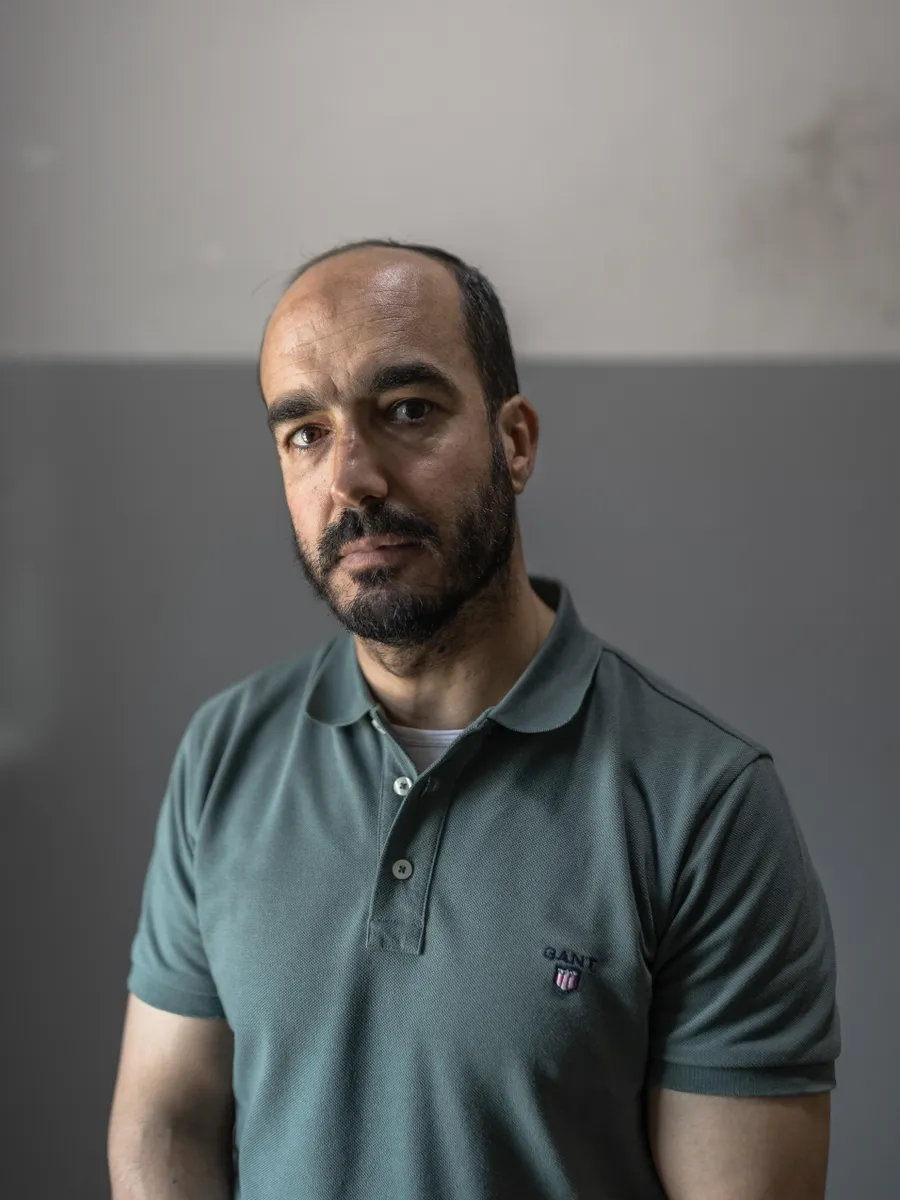
During an interview this past July at Radio Hayat in Nablus, where he works, Khuwaira demonstrated how slowly prisoners with scabies walked, holding their arms away from their bodies to avoid touching the sores. For two and a half hours, he described the nine months of terror he endured in the Huwara military detention camp and Megiddo and Nafha prisons, where he was held in administrative detention. To this day, he does not know why he was arrested: Administrative detainees are held without indictment.
“Four days after I was arrested, they took me for questioning. The police officer asked if I had Facebook, then opened my page and said, ‘Oh-ho! Look at this, you’re inciting against us.’ I told him, how is that incitement? I posted a photo of a young man the army killed in Nablus and wrote that Israel had killed him. That’s all. A news headline and a news report. I’m a journalist covering Palestine, not Senegal. When something happens in Nablus, I cover it.”
As noted, Khuwaira was not prosecuted, and no evidence was presented of his involvement in illegal activity. His Facebook page mostly contains news reports, but it also includes writings that Israeli readers would find hard to stomach, including eulogies for former Hamas leader Yahya Sinwar, whom he called a great leader.
Khuwaira was released from prison in January 2026 after losing 22 kilograms. His 9-year-old son did not recognize him. A short video filmed on his release, in which he tearfully described what he had endured in prison, was posted on the popular Telegram channel Abu Ali Express and received thousands of likes. Israel National News (Arutz Sheva, an outlet identified with the settler movement) published the video under a headline calling him a “terrorist.”
“The day we arrived at Nafha was the worst day of my life. On the way, your feet are shackled and your eyes are covered. During the drive, they slap you, kick you, shove you. They drag you by the cuffs like a sheep, and your hands start bleeding. At the entrance to Nafha, you have to take off all your clothes. You bend over, they check that you aren’t hiding anything, then cuff your hands behind your back.
“From there, they took us one by one to a metal cage. A siren went off because of an attack from Iran, and the guards went away and left us there. You sit on your legs, and the cuffs pull tight. Your circulation gets cut off, and your hands go numb. You can’t feel them anymore. There’s no food. After five or six hours in the cage, they stood us up one by one in a long line. Each person had his head against the back of the person in front, and nobody was allowed to lift his head. Then they brought a rope and threaded it between us. We were like dominoes. An officer kicked the last prisoner in the line in the back, and we all crashed into each other. That’s how they marched us, 30 people. We had to turn without lifting our heads. We banged our heads against the wall, against the door. If the person behind you steps on the chain, you nearly fall, and they laugh. Anyone who lifts his head gets slapped or kicked. It was a dark, dark day.
“In Nafha, I was the shawish, the person who hands out the food. Every day, you get 10 slices of bread. Breakfast was a spoonful of labneh and a spoonful or half a spoonful of jam. There were 10 thin plastic plates on the ground, and I’d put a spoonful of labneh on each one. I measured the jam by the lines on the plastic cup: one line, two, three. You want it exact to the millimeter. Nobody can get more than anyone else. Handing out the food is very hard work.
“They brought a rope and threaded it between us. We were like dominoes. An officer kicked the last prisoner in the line in the back, and we all crashed into each other. That’s how they marched us, 30 people.”
Samer Khuwaira
“Lunch varies. On Sundays, there’s a cup or half a cup of lentil soup and two spoonfuls of rice. You tear up the bread and put it on the rice to bulk it out. On Saturdays, they give you half a potato and a schnitzel. You cut that up and divide it equally, too, then divide whatever is left among the prisoners again. For dinner, there are two or three spoonfuls of hummus, an egg and two spoonfuls of tahini. Twice a week, they give you a spoonful or two of tuna, and once a week, hot dogs.
“The basic things you have are a cup and a plate made of very, very thin plastic. I got my cup on June 18 and gave it back on January 7. The exact same cup. I washed it 100 times. Want to hear something funny? A prisoner who was released gave me his cup. It split, so they stitched it up with a shirt and thread, because you can’t get a replacement. You get four rolls of toilet paper a month.
“During raids, a force comes in, we all lie on our stomachs with our hands tied, and they bring in a dog and kick us. Sometimes they spray gas, and you can’t breathe. Sometimes they throw stun grenades for no reason. It happens in the middle of the night, too, while you’re sleeping. They approach step by step, then open the door, spray gas and beat us. Sometimes it happens every day, sometimes once a week. You never know. Sometimes they come into the room and throw all our things on the floor: shampoo, toothpaste, mattresses, blankets. They squeeze out the toothpaste and smear it on the mattresses.
“To protect each other during raids, we’d huddle together. I was the oldest, so the younger men protected me. The medic is there with the guards during the raid, and sometimes he hits and curses, too. Our heads were always down, but we could often tell from the voices that he was there. Sometimes he’d come after they had beaten us, ask if anyone was hurt and bring them acetaminophen.
“Once, we were in the yard when the guards suddenly started throwing grenades. They fired four or five times at the ground and dragged us all to the toilets, which were full of water. We were handcuffed. They started taking people one by one to the shower, stripping them, beating them and taking their pictures. They didn’t take me. I don’t know why. We heard the shots and the screams. Afterward, a 21-year-old prisoner came back into our cell, pulled down his pants and showed us a bloody mark about five centimeters across on his buttock. He couldn’t walk, but they threatened to shoot him again if he didn’t go back into the cell. For 10 days afterward, he couldn’t walk, eat or sleep. No medic came to treat him. Someone else in our room was shot with a rubber bullet from two meters away because he wasn’t moving fast enough during a raid on the cell.
“Trying to understand what’s happening in Nafha now is like trying to understand what’s happening on Mars. Not a single minute is normal. Not one. One of the reasons I got sick was the constant fear.
“When I got scabies, I asked to go to the clinic. That was September 12, but they didn’t take me until December 12. There were 10 of us in a room with six beds, and three of us had scabies. I couldn’t sit down. When I took off my underpants, it was all blood, infection, yellow. I was in pain all the time. At night, I couldn’t sleep. I would pace back and forth in the room because I was in pain and there was no medicine. The disease is on the mattress, in the clothes, on the door, on the walls. There’s no way to isolate yourself. Around September, I started having tooth pain, too. I couldn’t eat or sleep. Do you know how I treated it? I put toothpaste on it once, twice, five times, but it did nothing. After two days, one of the guys suggested rinsing my mouth with bleach. I did that two or three times. It helped a little.
“When you go out to the prison yard, there’s a poster listing prisoners’ rights under international law: ‘You have the right to food, water, medication,’ and so on. Sometimes the prisoners would laugh and ask a guard, ‘When are you going to start doing this?’ The guard would answer, ‘When Ben-Gvir approves it.’ If we told a guard a prisoner was very sick, he would say, ‘Call me when he dies, and I’ll put him in a black bag.’ I saw people pass out from lack of food, exhaustion, illness, fever.
“In the middle of all this misery, sometimes the prisoners would find something to laugh about. There’s never any tea or coffee, for example. So when we got up in the morning, some of the guys would go to the hot-water tap and say, ‘Let’s pretend it’s tea, it’s instant coffee, it’s cappuccino.’
“Every so often, they’d tell us the court had decided this or that [about improving the conditions], but it made no difference. I know nothing has changed to this day, because as a journalist, I interview prisoners when they’re released. A prisoner released three or four days ago from the prison where I was held told me things had gotten even worse.
“Two weeks before I was released, they took me to meet a Shin Bet [security service] officer. I asked him, ‘Why did you lock me up? I have a right to know why. I don’t want to go back to prison, so tell me what I did so I won’t do it again.’ He said there was no direct reason, that I was Hamas and my friends were Hamas. I told him, ‘I’m not Hamas, I’m religious. If you’re religious, should I call you Ben-Gvir?'”
“We would save food so we could feel full at least one day a week. We called it ‘the day of fullness'” Rabie Abu Naim, human rights activist, 35
Rabie Abu Naim, from the village of al-Mughayyir near Ramallah, works with Israelis to protect shepherds from settler violence. In January 2025, soldiers attacked him and his brother and broke his arm. One also tried to pull down his pants and struck him, injuring his genitals. He says that when he asked to lodge a complaint with the Military Police Criminal Investigation Division, they laughed at him.
Over the past three years, settler outposts have encircled his village, which has become a focal point for military raids. He was arrested a year ago, the night before the start of the olive harvest, when activists were preparing to help the farmers. During an appeal against his detention, a military judge accepted his lawyer’s assertion that he takes part in nonviolent activities alongside Israelis. Nevertheless, he remained in detention for nine months at the IDF-run Ofer camp and Ofer Prison, run by the prison service.
“I was held at the Ofer camp for 70 days. There wasn’t enough food, and for 20 days, all we got at each meal was labneh, one vegetable and four slices of bread. Everyone had stomach problems because of it. They didn’t give us toothbrushes. To shower, we got a little dishwashing liquid.
“The guards would raid the rooms every day, beat us, set dogs on us and tase us in the chest. When they tase you, your body freezes. They would hit our private parts, our ribs and our chests. Once, they came into the room before sunrise. Suddenly, the door opened and a stun grenade was thrown in. They said, ‘Everyone on your stomachs! Everyone surrender!’ They cuffed us and took us out one by one. They tased me while I was on my stomach, then stood me up, grabbed the cuffs and twisted my arms.

“I lost 15 kilograms during those 70 days at the camp. When I moved to Ofer Prison, the food got better. There was still very little, but there was more variety. Every morning, we got a spoonful of labneh and three slices of bread. On Saturday afternoons, there was a small schnitzel and three potatoes for 10 people, and each person got between seven and 10 olives and three slices of bread. On Saturday nights, each person got a hard-boiled egg, three slices of bread, two spoonfuls of tuna and two or three spoonfuls of tahini. There were also two tomatoes for 10 people, which we divided equally. On Sunday afternoons, there was enough rice to fill a small coffee cup, a cup of chickpeas, a cup of lentils and an egg. In the evening, they brought the same amount of rice, a cup of white beans and about a cup of salad. Most of the time, the rice wasn’t cooked properly. It was undercooked or dry, and the vegetables were rotten. The eggs smelled bad and were blue, but we ate them anyway.
“In the evening, we also got a little cup of peanut butter mixed with water. I used to wait for that all day. To celebrate birthdays and things like that, we’d make layers of bread and peanut butter.
“Most prisoners would save food for what we called ‘the day of fullness.’ Out of nine slices of bread, you hide, say, three. You collect bread until you have 30 or 40 slices, then start trading with other prisoners. An egg is worth two slices of bread, hummus is worth three. You save everything for a day when, say, you’ll have five or six eggs and a plate of rice. Then you have a big meal, so at least one day a week you can feel full. We usually did it on Saturdays, and some called it ‘Shabbat shalom.’
“Food can spoil when you save it, so the prisoners made a ‘fridge’ out of a plastic bag and put things like eggs inside. We would wrap the bag in wet socks and hang it on the window so the wind would blow on it and keep it cold. But there were risks, too. If the guards found the food during a search, they would throw it away.
“I asked for a medic because of the fungal infection, so a guard came in with a dog and told me, ‘Here’s your medic. Talk to him.'”
Rabie Abu Naim
“At first, they let us out to shower once every three days. Sometimes a whole week would go by without us leaving the room, depending on the guards’ mood. Four guys in my room had very severe scabies. The dampness also caused fungal infections that left patches on the skin. We couldn’t dry ourselves or wash properly. I asked for a medic because of the fungal infection, so a guard came in with a dog and told me, ‘Here’s your medic. Talk to him.’
“Once, I asked one of the guards if I could hang my towel in the sun. He refused, but I hung it up anyway. He told me, ‘You wait and see.’ I didn’t think much of it. That evening, after the count, guards came in and beat us just because of that. They kicked me in the stomach and face with their shoes.
“I only had one brown prison service uniform, one pair of underpants, and gray sweatpants and a shirt from the Red Cross. When I wanted to shower, I’d wash them and put them on the next day. About two months before my release, after the scabies had spread, the prison authorities started taking a little more interest. They began treating prisoners, launched a campaign against scabies, and the food became cleaner. They packaged it properly and kept it refrigerated so it wasn’t dirty, and they didn’t let prisoners put the trays on the floor. A new prison warden arrived then and we got new clothes, underwear and cleaning supplies.
“On April 20, 2026, eight prisoners in the wing were shot with rubber bullets. The prison authorities claimed they had rioted, but what happened was that one guard used to go around the wings at night, spraying gas for no reason. One guy with breathing difficulties passed out. The prisoners called the guard and told him the guy was going to die, but he cursed them. The shouting in the wing grew louder. Guards arrived and shot eight people in two adjoining cells.
“I found out through a prisoner from my village that my cousin had been killed in a settler raid on the village. He was my best friend. I banged my head against the wall, cried and quietly said to myself, ‘Allahu akbar’ [“God is the greatest”]. The prisoners calmed me down. The next day, guards from the Keter unit came into the cell. One put my head between his legs while the others held my arms and beat me on the back. They shouted, ‘You want to make trouble.’ I started foaming at the mouth. A guard kneed me in the ribs, and I passed out. Two of my ribs were broken. I was in pain for two months, and they didn’t treat me. Even now, I sometimes feel it.
“At the roll call every morning, everyone has to say, ‘Good morning, captain. Thank you very much, captain,’ and bow down. Then you have to stay on the floor for another half hour until they finish counting. Once, the guards came into the wings, threw us out into the yard and cuffed our hands behind our backs. They walked dogs over us and fired into the air. Our heads were pressed against the ground. They didn’t tell us why, but a few days later, new prisoners arrived and told us they had seen videos of Ben-Gvir visiting. That’s how we figured out why they had done it.
“One day, I had a court hearing. I was surprised when my lawyer told me during the hearing that my daughter had been born. I was detained for nine months, a relatively short time, but when I got out, I saw how much things in the village had deteriorated. It turned out my uncle’s community had left because of settler violence.
“Before I was released, a Shin Bet officer asked me about October 7. I told him I call it the cursed October 7. I told him, ‘Don’t look at me as a terrorist. No one is more peaceful than me. Our problem is with the extremist settlers who have turned the world upside down.’ If he had pushed me a little, I would have told him, ‘I have more Jewish friends than you do.’ I have Jewish friends I’m really proud of, who stood by me during my detention, before it and after it. I won’t forget that.”
“Some prisoners had diarrhea. The guards picked those very prisoners to hand out everyone’s food” R., 43, West Bank resident
When R., 43, was released from Ketziot Prison in April 2025, doctors told him not to hug his children. “I have five children,” he says. “For two weeks, I wasn’t allowed near them because of the scabies I caught at the end of my prison term. You itch all night and can’t sleep. Then blisters appear all over your body. When I told the prison doctor, he said he had nothing to give me: ‘When you die, you’ll get ointment from God.’ They don’t give you medicine there. Sometimes, if you ask for medicine, they punish you by turning off the light in the whole cell. You spend the whole day in the dark.
“There were 15 of us in a room meant for six. Not enough blankets, no clothes. I spent six months in the same pants and shirt. There were no spoons or cups, just a disposable plastic plate. If you try to wash it, it breaks. For three weeks, I didn’t have a toothbrush either. Then they brought me a small one.
“Every night, the Keter unit guards would come in, each time into a different cell. They’d come at 2 A.M., fire rubber bullets, sometimes spray tear gas inside the cell and close the door. After half an hour, they would open it and let us out into the yard. There, they would beat us and bring dogs to walk among us. Sometimes they would let a dog scratch you. If you try to push it away, they jump on you and beat you.
“I got to shower once every 15 days. The water was cold. There were six showers for 150 prisoners, and they gave us all half an hour. Then they shut off the water. If you got your shower in, you got it in.”
R.
“If your lawyer comes to visit, you go to the visiting room. You get beaten on the way there and on the way back. Your eyes are closed, your hands cuffed behind your back, your head down. If you lift your head, they beat you. They would fasten the cuffs very, very tight, and the shackles on your feet, too. If you fall, they beat you. Once, I asked a guard to loosen the cuffs a little because I couldn’t move, so he started beating me. Then they laugh at you. They were young, maybe 25. There were a lot of Druze among them, and they were more abusive than the Jews.
“At night, they would turn on a radio, and one of the guards would start singing and cursing at 3 A.M.: ‘You motherfuckers, we’re killing you, we’re burning you.’ I was moved through five wings, and it was like that everywhere.
“I got to shower once every 15 days. The water was cold. There were six showers for 150 prisoners, and they gave us all half an hour. Then they shut off the water. If you got your shower in, you got it in. We got one plastic cup of soap for the whole room: for your hair, your body, everything. You have nothing to wash yourself with. They give you half a plastic cup of laundry powder for the whole room.
“And you aren’t allowed to pray together, only on your own. If they heard us praying together, the Keter unit would come in, or they would take people away to punish them. They didn’t take me, but others told me they were put in a small room with a bag to use as a toilet, and at night, they had water poured over them. When people came back after three or four days, they couldn’t stand.
“Some people arrived from Megiddo Prison. They had diarrhea and couldn’t make it to the toilet. Sometimes they soiled themselves. The guards picked those very prisoners to hand out the food.”
The Israel Prison Service said in response: “The allegations described are untrue, have no factual basis and are part of the campaign to smear the State of Israel and its lawful institutions around the world. The IPS operates in accordance with the law and under continuous judicial review. All those incarcerated in IPS facilities are held in accordance with the law and receive the rights and necessary treatment prescribed by law.”
The IDF Spokesperson’s Unit said in response: “Since the outbreak of the war, substantial resources have been invested in establishing detention infrastructure. IDF detention facilities provide detainees with sleeping arrangements, food, hygiene, medical care and other conditions in accordance with the law and international law. Detention conditions and treatment are subject to internal monitoring and oversight mechanisms, as well as external and judicial review.
“The IDF rejects the allegations of systematic abuse of detainees. Abuse of detainees violates the law and IDF orders and is therefore strictly prohibited. The IDF has various oversight mechanisms to ensure that detention facilities under its responsibility operate in accordance with IDF directives and the law. These include continuous monitoring through closed-circuit cameras, periodic discussions within the General Staff, oversight by commanders at the facility, and other measures.
“Restraints are used on detainees to maintain the safety and security of the facility only in exceptional circumstances that justify their use, subject to Israeli law, the provisions of international law and IDF orders. Administrative detention is used only when the security authorities possess reliable, substantiated information indicating that the detainee poses a real threat to the security of the area, and no other alternatives exist to eliminate that risk.
“Administrative detention is used in accordance with the law and subject to an individual examination of each case, only after a professional official has reviewed the file and confirmed that an indictment cannot be filed on the basis of the nonclassified evidence. The orders are subject to judicial review by the court and are periodically reassessed.”
The Shin Bet declined to answer why Samoudi, Abu Naim and Khuwaira had been held in administrative detention.